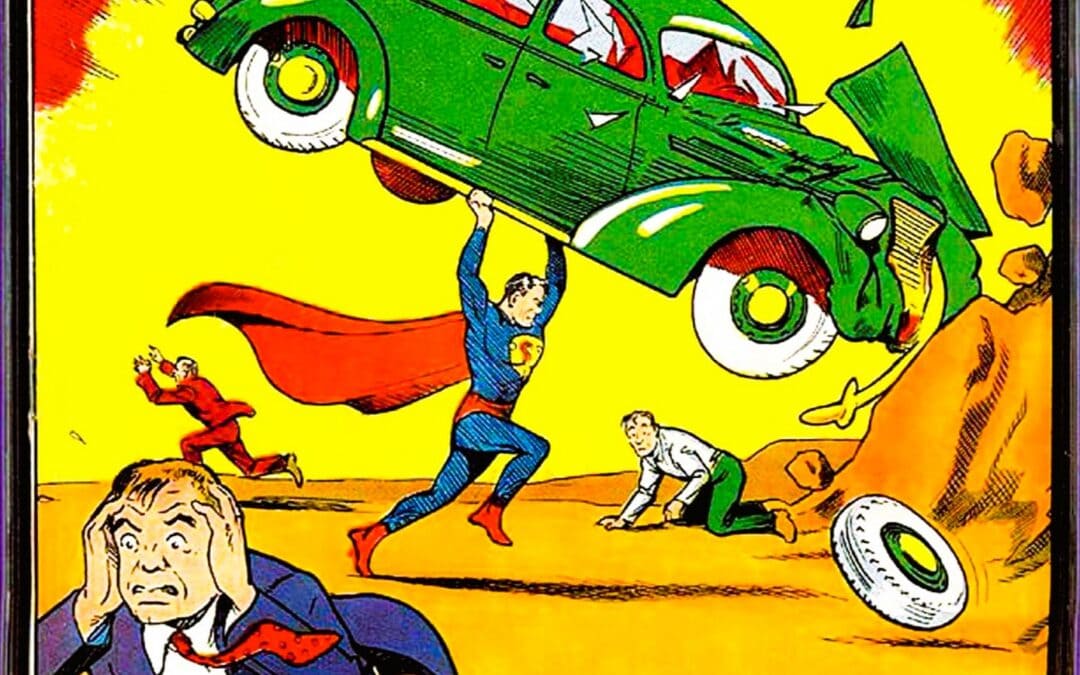
First appearance record setters show how a character debut can turn a low-cost newsstand comic into a collectible worth millions of dollars generations later. The Library of Congress explains that Superman’s 1938 debut in Action Comics #1 helped establish the superhero genre, while its holdings contain more than 140,000 comic issues representing roughly 13,000 titles. The leading first appearance record setters include Superman, Spider-Man, Batman, Captain America, Wonder Woman, Iron Man, and other characters whose earliest stories changed comic publishing. Sale price, certified population, numerical grade, page quality, provenance, restoration status, pedigree designation, and bidder interest all help explain why one copy can command far more than another.
- Action Comics #1 has reached $15 million.
- Golden Age issues occupy much of the upper market.
- Silver Age Marvel debuts have produced multimillion-dollar transactions.
- Record prices belong to specific copies rather than every example of an issue.
First Appearance Record Setters
Collectors researching first appearance record setters usually compare the exact printing, numerical grade, label category, paper quality, pedigree, restoration disclosure, and sale date before treating two transactions as useful comparables. A hands-on example appears when two Amazing Fantasy #15 copies look similar in online photographs but one sits several grades higher, then population data reveals that available supply contracts sharply as condition improves, creating a dramatic price difference. CGC census information and auction archives help separate condition scarcity from general character popularity, while photographs can reveal centering, corner wear, spine stress, and cover presentation. Private transactions should also be separated from public auctions because bidding visibility, buyer competition, commissions, and sale structure may differ.
- Confirm the exact issue and printing.
- Compare copies within matching grade ranges.
- Check restoration and conservation labels.
- Separate private transactions from public auctions.
- Record the sale date for market context.
1. Superman First Appearance
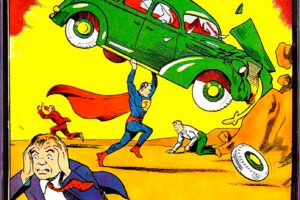
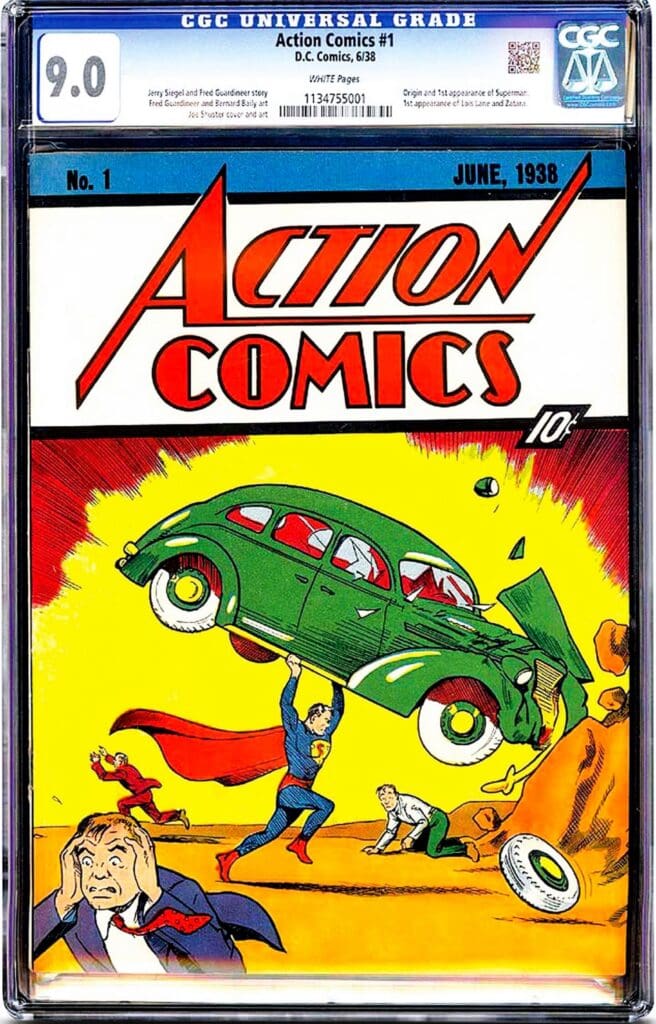
Action Comics #1 leads the first appearance record setters after a CGC 9.0 copy sold privately for $15 million in January 2026. ComicConnect identifies the issue as Superman’s first appearance and origin, while the Library of Congress credits the 1938 release with helping establish the superhero format that became a major part of American popular culture. The record specimen once belonged to Nicolas Cage, was stolen in 2000, recovered in 2011, and later returned to the collecting market, giving the copy a documented ownership history beyond its grade. Its $15 million transaction equals 150 million times the original 10-cent cover price, illustrating how scarcity, preservation, character importance, and provenance can converge in one comic.
- Record price: $15 million
- Grade: CGC 9.0
- Character debut: Superman
- Original cover price: 10 cents
- The copy carries documented celebrity provenance.
2. Joker Catwoman Debuts
Batman #1 became one of the largest first appearance record setters after the highest-graded known copy sold privately for $6 million in February 2026. CGC’s comic sale records identify the specimen as a 9.4 and confirm that the 1940 issue introduced the Joker and Catwoman, who first appeared as the Cat. The same CGC 9.4 copy sold through Heritage for $2.22 million in 2021, giving collectors a clear example of how one specimen can change value as demand, timing, and transaction conditions shift. Batman had already debuted in Detective Comics #27 in 1939, so Batman #1 draws much of its historic weight from the villain debuts and the beginning of his solo title.
- Private sale: $6 million
- Grade: CGC 9.4
- The Joker makes his first appearance.
- Catwoman debuts as the Cat.
- The same specimen sold for $2.22 million in 2021.
3. Spider-Man First Appearance
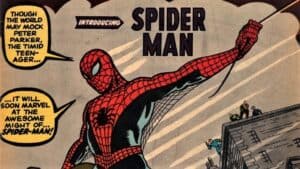
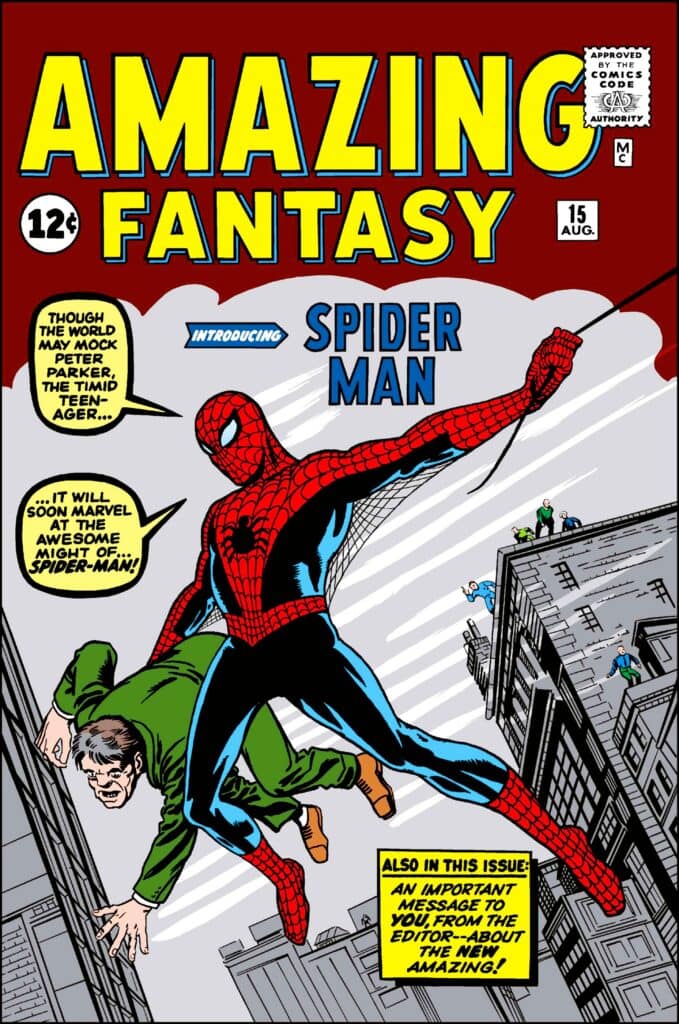
Amazing Fantasy #15 introduced Peter Parker as Spider-Man in 1962 and became one of the defining Silver Age first appearance record setters. A CGC 9.6 copy sold through Heritage for $3.6 million in September 2021, and CGC reported that the transaction established the comic-book price record at that time. Thousands of certified examples are known, yet the population becomes much thinner near the upper end of the grading scale, where collectors compete for copies with stronger corners, cleaner surfaces, better page quality, and limited wear. Buyers comparing Amazing Fantasy #15 should therefore study grade distribution rather than assuming the total census provides the full scarcity picture.
- Record sale: $3.6 million
- Grade: CGC 9.6
- Spider-Man makes his debut.
- Peter Parker’s origin appears in the same issue.
- Upper-grade scarcity is tighter than the total population suggests.
4. Captain America Debut
Captain America Comics #1 became a $3.12 million first appearance record setter when a CGC 9.4 San Francisco Pedigree copy sold through Heritage in April 2022. Heritage Auctions confirms that the issue introduced Captain America, Bucky, and the Red Skull, giving collectors three character milestones within one release. Joe Simon and Jack Kirby’s cover depicts Captain America punching Adolf Hitler months before the United States entered World War II, adding wartime context that goes beyond superhero history. Pedigree status, preservation, artwork, character significance, and the political imagery of the era all help distinguish the record specimen from lower-grade examples.
- Sale price: $3.12 million
- Grade: CGC 9.4
- Captain America and Bucky make their debuts.
- Red Skull also appears for the first time.
- The record copy carries San Francisco Pedigree status.
5. Human Torch Debut
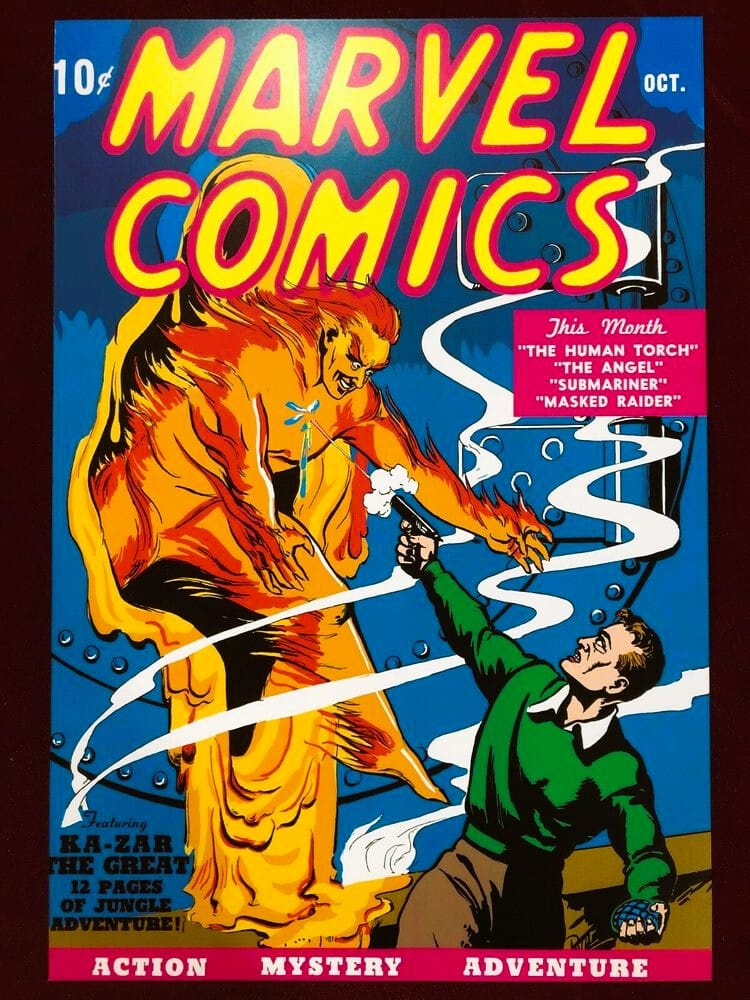
Marvel Comics #1 sold for $2,427,777 through ComicConnect in March 2022 and remains one of the leading Golden Age first appearance record setters. CGC identifies the CGC 9.2 specimen as the Pay Copy because publisher payment notes appear across several interior pages and the cover. The issue introduced the original Human Torch, an android named Jim Hammond, rather than Johnny Storm from the Fantastic Four, an important distinction for collectors tracing Marvel character history. CGC reports that creator Carl Burgos received $128 in 1939 for 16 Human Torch pages, connecting this particular copy directly with the financial records behind early comic production.
- Sale price: $2,427,777
- Grade: CGC 9.2
- The original Human Torch makes his debut.
- The Pay Copy contains publisher accounting notes.
6. Batman First Appearance
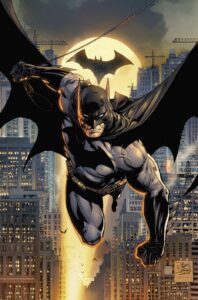
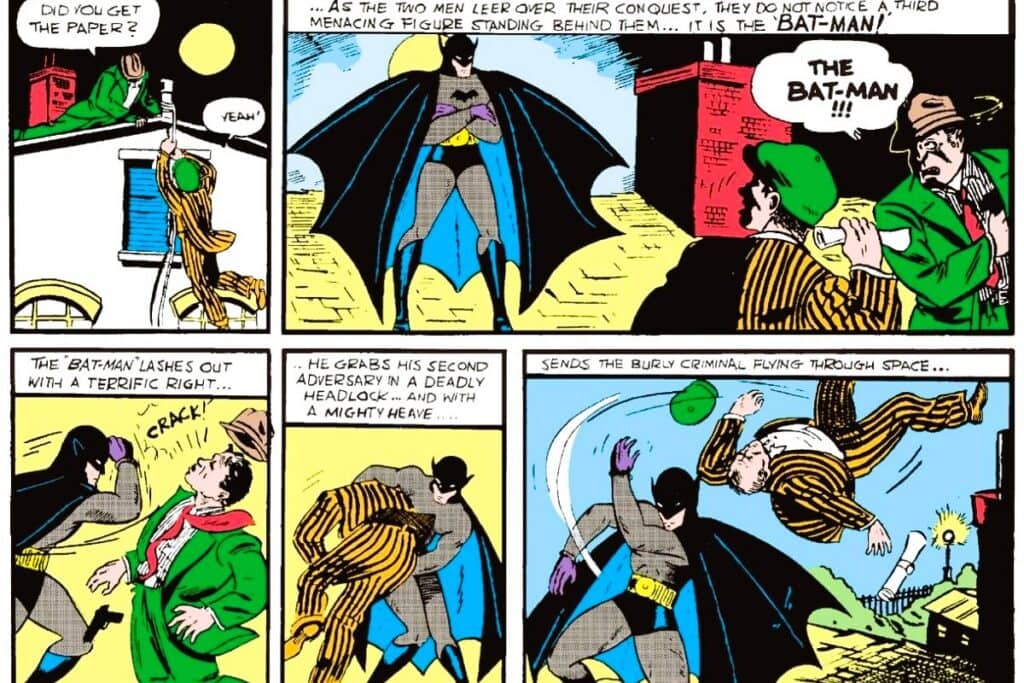
Detective Comics #27 introduced Bruce Wayne as Batman and Commissioner Gordon in 1939, securing its position among first appearance record setters. A CGC 7.0 copy sold through Heritage for $2.318 million in February 2026, and Heritage reported only 87 CGC-certified examples at the time, including 41 carrying Universal labels. Just six copies ranked above the record specimen in the census cited for the sale, demonstrating how quickly available supply contracts once collectors seek stronger grades. The Library of Congress also identifies Detective Comics #27 as Batman’s debut, reinforcing the issue’s historical importance.
- Sale price: $2.318 million
- Grade: CGC 7.0
- Batman makes his first appearance.
- Commissioner Gordon also debuts.
- Heritage cited 87 CGC-certified copies.
7. Fantastic Four Debut
Fantastic Four #1 sold for $2.04 million through Heritage in September 2024, placing Marvel’s foundational superhero team among first appearance record setters. Heritage reported that the CGC 9.6 specimen was one of only two copies carrying that grade when the sale occurred. The 1961 issue introduced Mister Fantastic, Invisible Girl, Johnny Storm’s Human Torch, the Thing, Mole Man, and Giganto, packing several character milestones into a single comic. Collectors comparing examples should look beyond the issue’s popularity and examine how few copies survive near the highest grade levels because condition scarcity helped separate the record specimen from the wider population.
- Sale price: $2.04 million
- Grade: CGC 9.6
- Only two copies held that grade at the sale date.
- The Fantastic Four make their debut.
- Mole Man also appears for the first time.
8. Iron Man Debut
Tales of Suspense #39 introduced Tony Stark as Iron Man in 1963 and has reached a documented $2 million transaction according to CGC’s updated comic sales data. That figure surpasses the $840,000 Heritage sale of another CGC 9.8 copy in April 2024, showing why first appearance record setters require current transaction research instead of dependence on an older price guide. CGC credits Stan Lee, Larry Lieber, Don Heck, Jack Kirby, and Steve Ditko with work connected with Iron Man’s debut. Tony Stark’s original gray armor also differs dramatically from later red-and-gold designs, giving the issue visual importance alongside its character milestone.
- Documented record: $2 million
- Character debut: Tony Stark as Iron Man
- Publication year: 1963
- Another CGC 9.8 sold for $840,000 in 2024.
9. Wonder Woman Debut
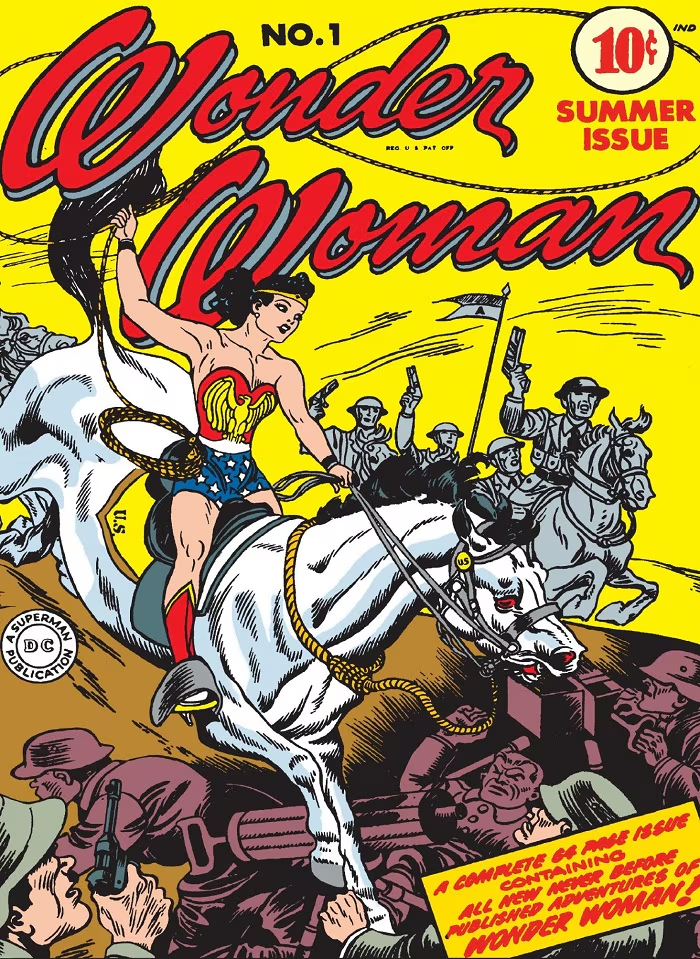
All-Star Comics #8 contains the origin and first appearance of Wonder Woman and sold for $1.62 million in CGC 9.4 condition through Heritage in June 2022. Heritage’s issue records also identify the first appearance of Paradise Island, later known as Themyscira, giving the issue another piece of Wonder Woman mythology. The Library of Congress confirms Wonder Woman’s December 1941 debut and identifies her as one of the best-known female superheroes to emerge from that period. Her introductory story occupied only part of the issue, yet those pages became one of DC’s most influential character debuts.
- Sale price: $1.62 million
- Grade: CGC 9.4
- Wonder Woman makes her first appearance.
- Paradise Island also debuts.
10. Flash First Appearance
Showcase #4 introduced Barry Allen as the Silver Age Flash and Iris West in 1956, helping revive the superhero genre for a new generation of readers. A CGC 9.6 copy with white pages sold through Heritage for $900,000 in January 2024, and Heritage identifies the issue as one many collectors associate with the beginning of the Silver Age. CGC has reported hundreds of certified copies, yet the record specimen occupied the upper end of the grading population when it entered the market. Carmine Infantino and Joe Kubert’s artwork helped establish Barry Allen’s Flash identity, making the book historically significant even beyond its sale price.
- Sale price: $900,000
- Grade: CGC 9.6
- Barry Allen debuts as the Flash.
- Iris West also makes her first appearance.
- The record copy has white pages.
First Appearance Values
First appearance record setters demonstrate that a character debut alone does not create a multimillion-dollar price. Numerical grade, page color, restoration, pedigree, certified population, cover appeal, character demand, provenance, and sale timing can separate two copies of the same issue by enormous amounts. CGC sales data shows that Action Comics #1 has produced transactions across a wide range depending on the specimen involved, while the $15 million record represents one exceptional copy. Collectors gain better pricing context by comparing transactions from similar grades, label types, page qualities, restoration categories, and market periods.
- Issue number is only one pricing factor.
- Grade can narrow available supply dramatically.
- Restoration changes meaningful comparisons.
- Pedigree can document ownership history.
- Sale date provides market context.
Comic History Facts
First appearance record setters belong to a broader history of American comic publishing that stretches far beyond auction prices. The Library of Congress explains that the modern comic-book format emerged during the 1930s and reports holdings of more than 140,000 issues representing roughly 13,000 titles. Its collections include superhero publications, original artwork, and other archival materials that allow researchers to examine how characters moved from inexpensive entertainment into enduring pieces of popular culture. Public collections give comic collectors historical evidence that cannot be measured through sales records alone.
- The Library holds more than 140,000 comic issues.
- About 13,000 titles are represented.
- Superhero publishing expanded after Superman’s debut.
- Original comic artwork is preserved in public collections.
Buying Record Comics
Collectors pursuing first appearance record setters through online marketplaces face risks that extend beyond choosing the correct numerical grade. The Federal Trade Commission recommends researching seller histories, examining photographs of the actual item, reviewing refund policies, retaining communication records, and selecting payment methods that provide buyer protections. Certification numbers should also be checked against grading-company databases whenever an expensive slab is offered, since the number should match the comic, grade, label, and holder shown. A listing priced far below established comparable transactions deserves extra investigation before any payment is sent.
- Inspect photographs of the exact comic.
- Research the seller before payment.
- Review marketplace refund policies.
- Keep invoices and transaction messages.
- Verify grading certification numbers.
Protecting Record Comics
Preservation deserves close attention because many first appearance record setters were printed on materials that are now more than 80 years old. The Library of Congress comic-care guidance explains that many comics were produced with acidic wood-pulp paper and recommends a cool environment, approximately 35% relative humidity, restricted light exposure, and supportive protective enclosures. The Library also advises keeping food, drinks, tape, glue, and rubber bands away from comic books because stains, adhesives, moisture, and physical pressure can cause damage. Controlled storage cannot reverse existing deterioration, but it can reduce unnecessary wear while helping collectors preserve page quality and structural condition.
- Target roughly 35% relative humidity.
- Limit strong or direct light exposure.
- Avoid attics and damp basements.
- Use supportive preservation enclosures.
- Keep adhesives and rubber bands away from pages.

First Appearance Record Takeaways
The strongest first appearance record setters combine historical importance, restricted supply in desirable condition, and intense collector interest. Action Comics #1 leads at $15 million, Amazing Fantasy #15 reached $3.6 million, Captain America Comics #1 sold for $3.12 million, and several other character debuts have crossed the $2 million mark. Government archives confirm that Superman, Batman, Wonder Woman, and other heroes emerged during periods that reshaped American comic publishing, while grading and auction records show how dramatically preservation can influence the final sale. Every record belongs to one specimen with its own grade, provenance, page quality, restoration history, pedigree status, and transaction circumstances.
- Action Comics #1 leads at $15 million.
- Several character debuts have crossed $2 million.
- Golden Age and Silver Age comics both appear.
- Grade-specific comparisons provide stronger pricing context.
- Historical significance and scarcity often work together.
FAQs
What First Appearance Sold Highest?
Action Comics #1 holds the documented record after a CGC 9.0 copy sold privately for $15 million in January 2026. The issue contains Superman’s 1938 debut.
Why Are Debuts Valuable?
First appearances mark a character’s published debut, but scarcity, grade, restoration, page quality, pedigree, and collector demand determine price. Debut status alone does not guarantee a record sale.
What Is Spider-Man’s Debut?
Spider-Man debuted in Amazing Fantasy #15 in 1962. A CGC 9.6 copy sold for $3.6 million through Heritage in 2021.
What Is Batman’s Debut?
Batman debuted in Detective Comics #27 in 1939. A CGC 7.0 example sold for $2.318 million in February 2026.
Does Comic Grade Matter?
Yes. Higher grades can have much smaller populations, creating large price differences between copies of the same issue.