The most valuable comic book variants can bring extraordinary prices when tight distribution, character history, condition, artwork, and collector interest come together in one issue. Retailer incentives, sketch editions, later printings, and promotional releases create separate forms of scarcity, yet low supply does not guarantee continued price growth. The rarest and most valuable comic book variants below feature Spider-Man, Miles Morales, Spawn, Batman, Wolverine, Hulk, Spider-Gwen, and Kamala Khan issues supported by auction records, census figures, or unusual distribution methods. Their ordering rules, market performance, grading data, cover details, and publication history give collectors several ways to judge scarcity before spending money.
- Distribution rules can sharply reduce availability.
- Character milestones may increase collector competition.
- Auction records can differ greatly from later sales.
- Grading populations help place reported rarity in perspective.
Rare Variant Identification
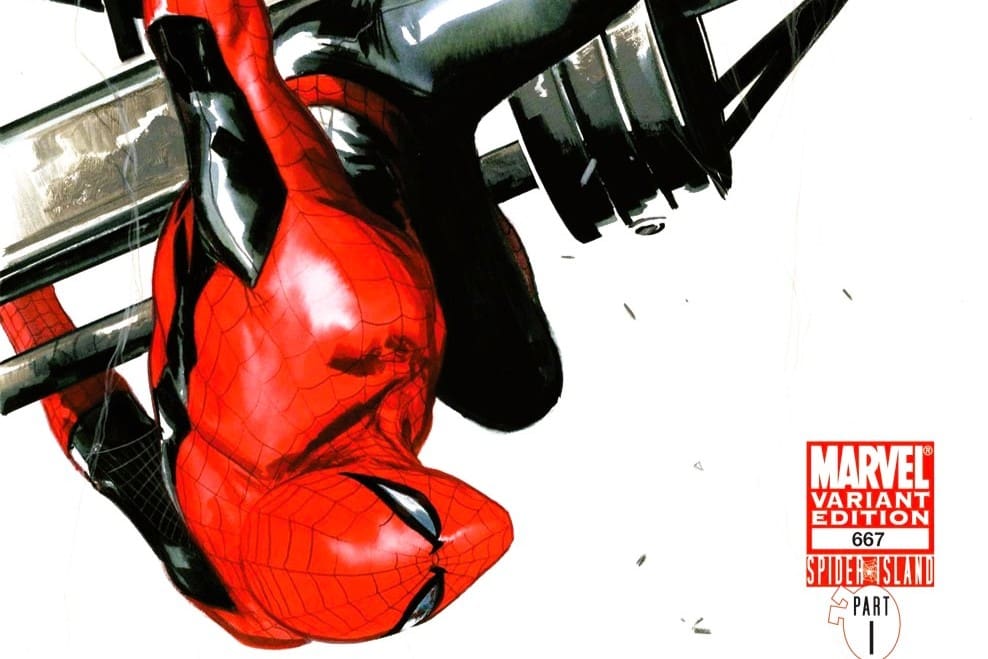
Collectors researching the rarest and most valuable comic book variants should identify the exact edition before checking any price guide because multiple covers from the same issue can carry completely different values. A hands-on example comes from Amazing Spider-Man #667, where a collector can compare the standard cover with the Gabriele Dell’Otto version and discover that the Dell’Otto edition required retailers to meet a 1:100 order threshold. Diamond Comics confirmed that retailers could order one Dell’Otto variant after ordering 100 regular copies. That rule describes retailer eligibility rather than the total number printed, so collectors should avoid treating the ratio as a production figure.
- Match the cover artwork before researching price.
- Check the grading label for variant wording.
- Verify printing information and UPC differences.
- Compare only copies with similar grades and labels.
1. Amazing Spider-Man 667
Amazing Spider-Man #667 with the Gabriele Dell’Otto cover remains one of the rarest and most valuable comic book variants because stores faced a steep 1:100 qualification requirement. A CGC 9.8 copy sold through Heritage Auctions for $43,200 in June 2022, while another 9.8 brought $28,800 in January 2025. Heritage reported 76 CGC-certified examples in December 2024, including 24 graded 9.8 with none higher, giving buyers a concrete census snapshot rather than an unsupported print-run estimate. Collectors comparing raw copies should inspect spine stress, corner wear, surface dents, and color-breaking marks because condition becomes especially important when the high-grade population is small.
- Retailer incentive ratio: 1:100
- June 2022 Heritage sale: $43,200
- January 2025 CGC 9.8 sale: $28,800
- Cover artist: Gabriele Dell’Otto
- Census totals may rise as new copies are submitted.
2. Ultimate Fallout 4
Ultimate Fallout #4 combines a Marko Djurdjevic 1:25 incentive cover with the first full appearance of Miles Morales as Spider-Man, giving the comic both scarcity and character importance. Heritage recorded a CGC 9.8 sale at $43,200 in January 2023, followed by lower transactions including $27,600 in June 2023 and $9,900 for a CBCS 9.8 in April 2024. The auction house listed 174 CGC 9.8 copies with none higher in March 2023, showing that a book does not need a tiny census to command attention when demand centers on a major debut. Buyers comparing copies should also separate CGC and CBCS sales because different holders, labels, eye appeal, and auction timing can affect final prices.
- Retailer incentive ratio: 1:25
- Miles Morales makes his first full appearance.
- Peak Heritage result reached $43,200.
- Later sales demonstrate substantial market movement.

3. Spawn 185 Sketch
Spawn #185 Sketch Cover stands out because graded copies appear for sale less often than many other modern variants, making each auction useful for tracking demand. A CGC 9.6 example sold through Heritage for $14,030 in May 2026, while another 9.6 brought $12,000 in February 2025. Older sales data contains higher figures, yet newer auction results give collectors a more practical reference for current bidding behavior. The black-and-white presentation also helps distinguish the sketch edition from standard copies, reducing the chance of comparing the wrong version.
- Whilce Portacio supplied the cover artwork.
- May 2026 Heritage sale: $14,030
- February 2025 Heritage sale: $12,000
- Auction frequency can provide another scarcity signal.
4. Uncanny X-Men 510
Uncanny X-Men #510 appeared with several cover choices, but the J. Scott Campbell black-and-white Psylocke sketch version attracts sustained interest from variant specialists. The Grand Comics Database identifies the sketch cover as a separate edition, which helps collectors distinguish it from the color version that uses related artwork. Heritage sold a J. Scott Campbell Signature Series CGC 9.6 example for $9,000 in April 2025, while higher-grade transactions have reached larger amounts in other sales records. Collectors should compare Signature Series copies separately from Universal labels because the signature, verification status, and holder category create a different market.
- Cover character: Psylocke
- Cover artist: J. Scott Campbell
- Heritage CGC 9.6 sale: $9,000
- The color edition should be priced separately.
5. Wolverine 1 Variant
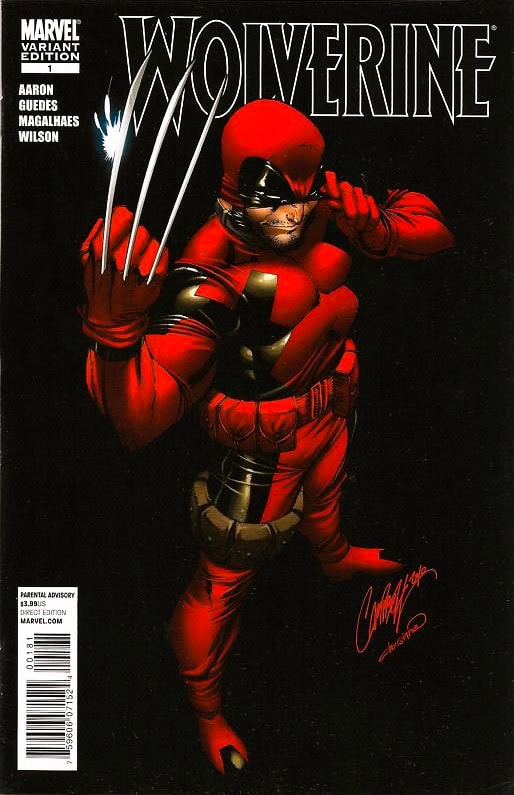
Wolverine #1 from 2010 includes a J. Scott Campbell Deadpool cover distributed through a return program rather than a typical ratio incentive. ComicConnect reports that retailers had to return 50 qualifying covers to receive the variant, creating a substantial barrier for stores that wanted a copy. ComicConnect also cited 53 Universal CGC 9.8 copies and 24 Signature Series 9.8 copies in one listing, while Heritage sold a Campbell-signed CGC 9.6 for $4,560 in 2023. This distribution history matters because rare variants can originate through returns, retailer meetings, convention promotions, order thresholds, or special programs, and each method affects supply differently.
- Cover artist: J. Scott Campbell
- Deadpool appears on the cover.
- Retailers faced a 50-cover return requirement.
- Signed CGC 9.6 Heritage sale: $4,560
- Distribution method helps explain scarcity.
6. Hulk 377 Printing
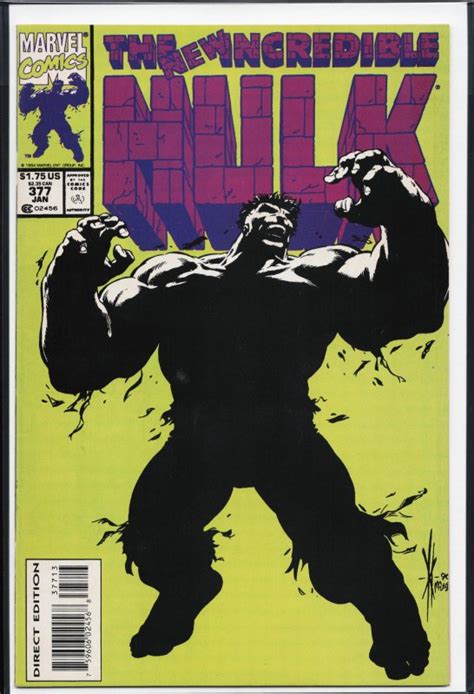
Incredible Hulk #377 shows why collectors should never dismiss later printings because its third printing developed a stronger market than many buyers would expect from a reissue. Completed-sale tracking records a CGC 9.8 transaction at $14,750 in August 2023, while later 9.8 results dropped considerably, making the book a useful example of price volatility. Collectors can identify the third printing through its green-dominant cover treatment, $1.75 cover price, and printing details rather than relying on the issue number alone. Dark cover areas also make spine ticks, edge rub, and handling marks easier to spot, which can influence whether a raw copy has a realistic chance at a high grade.
- The third printing is the edition discussed here.
- Historic CGC 9.8 sale: $14,750
- Later transactions have fallen far below that level.
- The $1.75 cover price assists with identification.
7. Spider-Verse 2 Variant
Edge of Spider-Verse #2 carries extra collector interest because it contains the first appearance of Spider-Gwen, while the Greg Land cover creates a separate chase edition within the issue. CGC reported 6,642 graded copies across the issue in August 2022, including 703 variant editions, and referenced a $9,000 Heritage sale for a Land variant graded 9.8. Those figures show that rarity can be relative because hundreds of graded copies may still represent limited supply when a character debut attracts a much larger buyer pool. Collectors should confirm the Greg Land artwork before comparing sales because other covers from the same issue can have different populations and prices.
- Spider-Gwen makes her first appearance.
- CGC counted 703 variant editions in 2022.
- Heritage CGC 9.8 sale: $9,000
- Cover verification prevents incorrect price comparisons.
8. Batman 608 RRP
Batman #608 RRP came through DC’s Retailer Roundtable Program, giving the issue a distribution path separate from standard comic-shop releases. Completed-sale tracking lists a CGC 9.8 Heritage result at $5,734 in March 2026, compared with a $5,040 Heritage sale in June 2022. Collector references often repeat production estimates near 400 copies, but no confirmed publisher total should be presented as settled fact, making distribution history and grading data safer evidence. Jim Lee’s connection to the Hush storyline adds demand, yet buyers still need to verify that a listing is the RRP edition because ordinary copies of Batman #608 are much easier to find.
- Jim Lee created the cover art.
- March 2026 CGC 9.8 sale: $5,734
- The edition came through a retailer program.
- Exact production totals remain estimates.
9. Captain Marvel 17
Captain Marvel #17 Second Printing gained attention because it features Kamala Khan during her early publication history and uses an Adrian Alphona cover different from the first printing. Heritage sold a CGC 9.8 example for $512.40 in March 2026 and reported 280 copies at 9.8 with none higher at that point. This comic gives collectors a useful reminder that a scarcer edition can remain desirable while its market price falls after an earlier period of speculation. Recent completed sales, census growth, character interest, and auction frequency should all be reviewed before an older asking price is treated as current value.
- Kamala Khan appears during her early publication history.
- Cover artist: Adrian Alphona
- March 2026 CGC 9.8 sale: $512.40
- CGC reported 280 examples at 9.8.
10. Amazing Spider-Man 678
Amazing Spider-Man #678 features Joe Quinones’ Mary Jane Venom cover, a 1:50 retailer incentive that became a recognizable target among Spider-Man collectors. Heritage explained that qualifying for the variant could be difficult because base-title orders limited how many stores were likely to reach the 50-copy threshold, and a CGC 9.8 sold there for $2,880 in August 2023. Separate completed-sale tracking recorded a $6,500 transaction in October 2025, showing how distinctive artwork can drive demand even without a major first appearance. Buyers should compare the UPC, cover art, incentive designation, and grading label before using any sale because regular copies of #678 trade in a completely different range.
- Retailer incentive ratio: 1:50
- Cover artist: Joe Quinones
- Heritage CGC 9.8 sale: $2,880
- Tracked October 2025 sale: $6,500
- Artwork demand contributes heavily to collector interest.

Variant Rarity Explained
Retailer incentive terminology can create confusion because a 1:100 designation does not mean that only 100 copies exist. Diamond’s Amazing Spider-Man #667 announcement shows how the system operated because a retailer became eligible to order one incentive copy after ordering 100 standard copies by the stated deadline. Final distribution depended on how many retailers qualified, how many base issues they ordered, whether they claimed the incentive, and whether any additional copies entered circulation afterward. Collectors studying the rarest and most valuable comic book variants should treat unsupported production claims cautiously unless a publisher, distributor, grading service, or auction archive provides documentation.
- 1:25 describes an ordering requirement.
- 1:100 does not represent final production.
- Base-issue orders influence possible variant supply.
- Publisher records are stronger evidence than repeated estimates.
Comic Variant Pricing
The rarest and most valuable comic book variants show why a record auction result should be separated from present market value. Ultimate Fallout #4 moved from a $43,200 Heritage sale to later results at $27,600 and below, while Amazing Spider-Man #667 moved from $43,200 to $28,800 in another Heritage transaction. Collectors gain a clearer view by reviewing several completed sales from the same grade, label type, signature status, and page-quality range instead of attaching one exceptional result to every copy. Provenance, eye appeal, bidding competition, auction timing, and the number of comparable copies available can all affect the final price.
- Historic records can become poor pricing guides.
- Comparable grades produce better evaluations.
- Signed copies should be separated from unsigned examples.
- Several completed sales provide stronger context.
Protecting Rare Variants
Comic preservation matters because paper, ink, staples, and cover stock can deteriorate even when a collectible remains untouched for years. The Library of Congress recommends cool storage conditions, about 35% relative humidity, limited light exposure, and supportive enclosures for comic books. The agency also advises against rubber bands, adhesive tape, glue, food, and drinks around collectible paper because stains, tears, moisture, and adhesive damage can permanently affect condition. Owners of raw variants should inspect storage boxes, bags, boards, and room conditions periodically rather than assuming a closed container provides permanent protection.
- Aim for about 35% relative humidity.
- Reduce exposure to intense light.
- Keep comics away from damp spaces.
- Use supportive preservation enclosures.
- Avoid tape, glue, and rubber bands.
Buying Valuable Variants
Collectors purchasing expensive variants online should verify the exact copy being offered instead of relying on stock photos or a vague title. The Federal Trade Commission recommends checking seller ratings, return policies, item photographs, written communications, and payment methods when using online marketplaces. Those precautions matter because the rarest and most valuable comic book variants may differ from common editions through a barcode, cover image, printing statement, incentive notation, or grading label. Certification numbers can also be checked through the grading company’s database so the holder details match the comic shown in the listing.
- Inspect photos of the actual copy.
- Verify grading certification numbers.
- Read seller history and return terms.
- Save receipts and marketplace messages.
- Choose payment methods with buyer protections.
Valuable Variant Key Takeaways
The rarest and most valuable comic book variants reach collector status through several paths rather than a single formula. Amazing Spider-Man #667 became scarce through a 1:100 incentive, Ultimate Fallout #4 combines a 1:25 cover with Miles Morales’ first full appearance, Batman #608 RRP came through a retailer program, and Hulk #377 proves that a later printing can become the edition collectors chase. Recent transactions also show that limited supply does not stop prices from declining, which makes distribution history, grading census figures, character significance, condition, and completed sales more useful when considered together. Collectors who verify those factors are less likely to overpay because of an outdated record or an incorrectly identified variant.
- Amazing Spider-Man #667 reached $43,200 at Heritage.
- Ultimate Fallout #4 also reached $43,200.
- Retailer ratios describe qualification requirements.
- Later printings can create separate collector markets.
- Historic peaks should be distinguished from current value.
FAQs
What Variant Is Rarest?
No single issue can be proven to be the rarest without complete publisher production and distribution records. Amazing Spider-Man #667 is a strong scarcity example because Heritage reported only 76 CGC-certified copies by December 2024, while Spawn #185 Sketch appears at auction less often than many mainstream variants. CGC census figures count only submitted comics, so raw copies can remain in private collections without appearing in the population report. Collectors should treat certified population and estimated print run as two separate measurements.
What Variant Is Valuable?
Amazing Spider-Man #667 and Ultimate Fallout #4 have each produced documented $43,200 Heritage sales, placing them among the largest modern variant transactions discussed here. Their value comes from different sources because #667 depends heavily on retailer scarcity while Ultimate Fallout #4 combines its incentive cover with the first full appearance of Miles Morales. The rarest and most valuable comic book variants often attract greater demand when scarcity overlaps with character history, artist popularity, or an instantly recognizable cover. Current value still depends on grade and recent transactions rather than a record sale by itself.
What Does 1:100 Mean?
A 1:100 designation generally means a retailer had to order 100 regular copies to qualify for one incentive copy under the rules of that promotion. Diamond used that structure when announcing Amazing Spider-Man #667. The ratio does not reveal the final production total because retailers may qualify in different numbers and some stores may choose not to order the incentive. Collectors should never treat the ratio itself as proof of how many copies survive.
Are Later Prints Valuable?
Later printings can become valuable when distribution falls, alternate artwork gains a following, or high-grade copies become difficult to locate. Incredible Hulk #377 Third Printing provides a clear example because one CGC 9.8 sale reached $14,750 before later prices dropped. Captain Marvel #17 Second Printing provides another lesson, with a CGC 9.8 selling for $512.40 at Heritage in March 2026 after greater enthusiasm during an earlier market cycle. Printing order alone does not create value, so scarcity, demand, character relevance, and completed sales should be considered together.
Does CGC Grade Matter?
CGC grade matters because buyers of modern variants often compete most heavily for copies near the top of the grading scale. Amazing Spider-Man #667 had 24 CGC 9.8 copies and none higher in Heritage’s December 2024 census information, while Ultimate Fallout #4 had 174 CGC 9.8 examples and none higher in March 2023. Population totals can change whenever another comic is submitted, making the census date an important part of any scarcity statement. Collectors researching the rarest and most valuable comic book variants should compare grade, label category, census date, page quality, eye appeal, and recent completed sales rather than relying on one measurement.