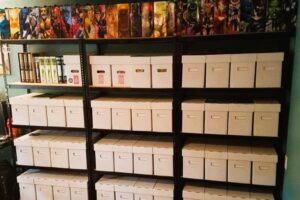

Comic Book Bags and Boards help shield collectible issues from fingerprints, surface abrasion, folded corners, airborne dust, and repeated handling, yet an improper fit can cause damage instead of preventing it. Comic Book Bags and Boards differ by publication era, enclosure material, backing-board construction, thickness, and the physical dimensions of each issue. Collectors benefit from knowing how Current Age, Silver Age, Golden Age, magazine-size, polypropylene, polyethylene, Mylar, and backing-board options compare before buying supplies for an entire collection. Matching the enclosure to the comic gives the cover and spine enough support while reducing pressure on edges, unwanted bowing, and movement inside a storage box.
- Bag dimensions should correspond with the comic book being protected.
- Backing boards help reduce flex during handling and storage.
- Plastic materials differ in clarity, rigidity, cost, and expected service life.
- Older comic books may require wider enclosures than recent issues.
Comic Book Bag Sizes
Comic book bags are commonly organized by collecting era because publishers have changed trim dimensions numerous times throughout comics history. A collector working through a mixed collection might find that a Current Age sleeve accepts one issue with room to spare while a Silver Age comic catches along the bottom corners, a useful clue that the older book needs a broader enclosure. Manufacturer measurements can vary, so the publication period should act as an initial reference rather than the sole sizing method. Measuring the height, width, and thickness becomes especially helpful for annuals, prestige books, square-bound editions, giant-size comics, and unusual independent releases.
- Current Age supplies fit many contemporary comics.
- Silver Age bags offer increased width.
- Golden Age products accommodate broader vintage formats.
- Magazine sleeves handle many oversized publications.
- Nonstandard books should be measured before ordering supplies.
Current Age Bags
Current Age bags are made for many comic book issues released during recent decades and tend to create a closer fit around modern trim dimensions. Monthly comics with conventional covers usually fit without trouble, while annuals, cardstock variants, foil editions, square-bound books, or thicker specials can require added clearance. A comic should enter the sleeve without the corners rubbing the seams or the spine pushing against stretched plastic. Resistance during insertion, visible cover curvature, or tension near the opening indicates that the collector should test a larger size rather than force the issue inside.
- Use them for many monthly comic releases.
- Check thick covers before inserting the book.
- Leave clearance around exposed corners.
- Choose a larger sleeve if the spine feels compressed.
Silver Age Bags
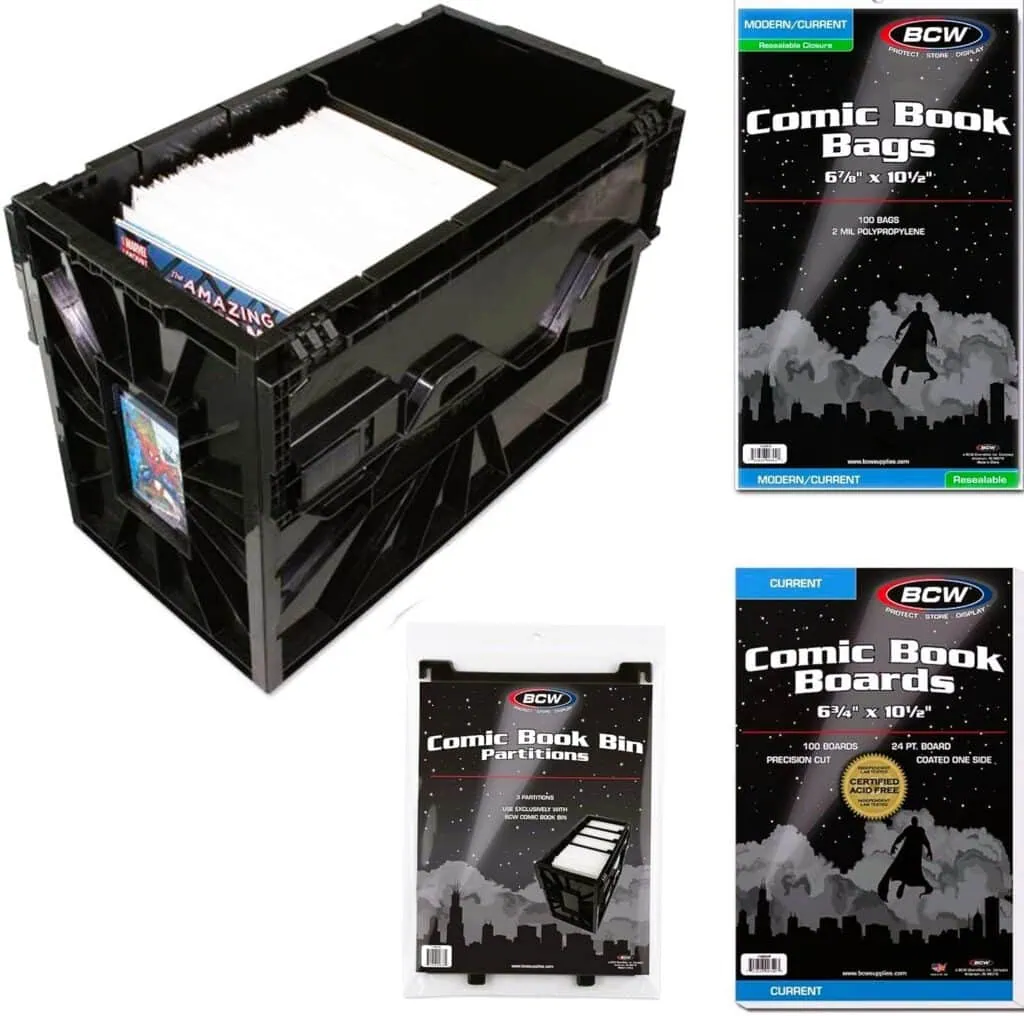
Silver Age bags provide more width than most Current Age options and are commonly used for comic book issues published from the late 1950s through the early 1970s. Some collectors also choose this size for newer comics because the added room makes insertion easier, particularly with heavy cover stock, double-sized issues, or variants that feel cramped in narrow sleeves. Greater clearance can reduce the chance of clipping a corner against the plastic while removing or replacing a book. Matching Silver Age boards still need to support the comic well enough that it does not slide from side to side whenever the bag is moved.
- Works with many Silver Age comic books.
- Provides more room than Current Age sleeves.
- Can accommodate thicker modern issues.
- Pair the bag with a board made for the same dimensions.
- Test the fit before converting an entire collection.
Golden Age Bags
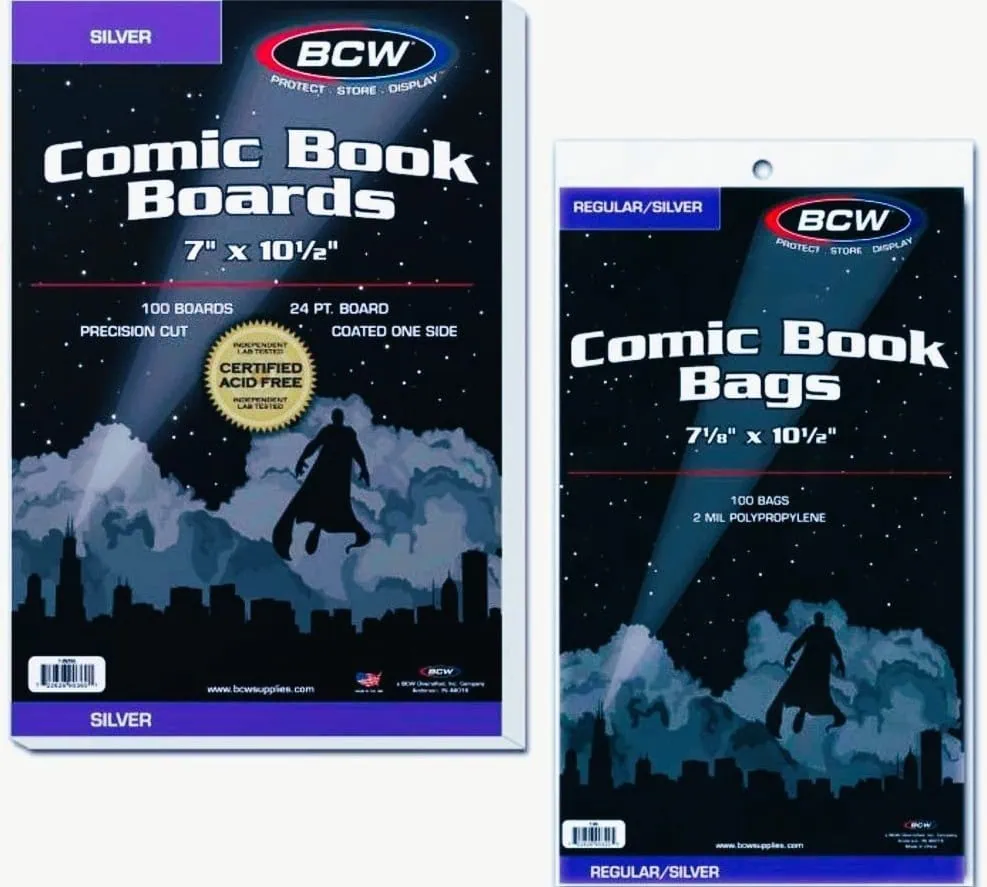
Golden Age comic book issues often need wider bags because many publications from the 1930s through the early 1950s were produced in larger formats than later comics. Aging paper can become delicate around the edges, folds, and staple areas, making an undersized sleeve risky when a collector inserts or removes the book. A roomier enclosure provides space to guide the comic downward without scraping weakened corners against the seams. Expensive Golden Age issues can also benefit from heavier backing support because extra rigidity limits flex when the book is lifted from a box.
- Choose broader bags for many early comic formats.
- Give fragile edges adequate clearance.
- Avoid pushing vintage covers through narrow openings.
- Consider thicker boards for costly key issues.
- Support weakened staple areas during handling.
Magazine Size Bags
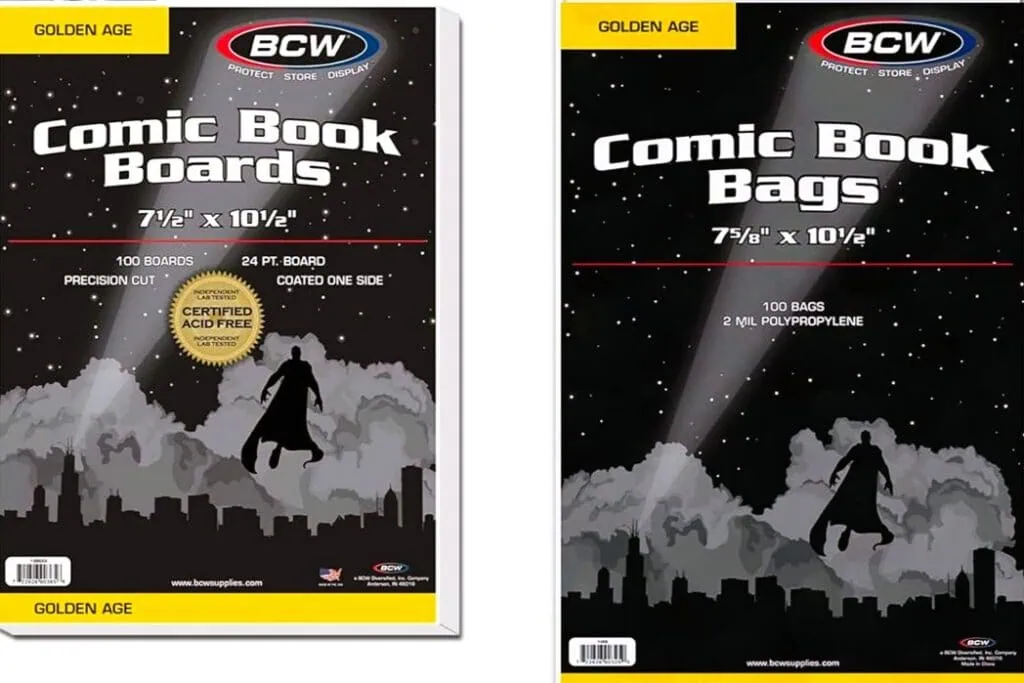
Magazine-size Comic Book Bags and Boards become useful when a publication exceeds the dimensions of standard Golden Age supplies. Magazine-format comics, prestige editions, oversized specials, thick graphic publications, and some independent releases can fall outside ordinary comic measurements. Spine depth deserves attention because a bag may match the width of a book while still pulling across the front cover once a thick binding is inserted. Measuring all three dimensions before purchasing supplies helps prevent ordering a sleeve that appears correct on paper but creates unwanted tension in practice.
- Use them for oversized comic formats.
- Measure spine depth along with height and width.
- Pair oversized sleeves with compatible boards.
- Test one publication before buying supplies in quantity.
Comic Bag Materials
Collectors usually encounter polypropylene, polyethylene, and polyester film when comparing comic book bags. Each material behaves differently in terms of transparency, flexibility, stiffness, price, and expected lifespan, so the preferred choice can depend on both the value of the issue and how frequently it is handled. The Library of Congress preservation guidance discusses chemically stable enclosure materials for paper collections and includes polyester film among preservation options. Collectors should review product specifications rather than assuming every transparent sleeve provides identical storage characteristics.
- Polypropylene offers crisp cover visibility.
- Polyethylene has a softer feel.
- Polyester film is used for preservation enclosures.
- Material choice can depend on comic value and storage plans.
Polypropylene Comic Bags
Polypropylene bags remain a common choice for everyday comic book collections because they are transparent, lightweight, and sold at a lower price than many polyester products. The smooth material keeps cover artwork easy to see, which can make it convenient for boxes that collectors browse on a regular basis. Polypropylene can develop haze, wrinkles, brittleness, or seam damage as it ages, particularly when a collection is exposed to unfavorable temperatures. Routine inspections allow collectors to replace a failing sleeve before cracks or distorted plastic begin interfering with handling.
- Provides clear cover viewing.
- Works well for collections containing many issues.
- Usually costs less than polyester alternatives.
- Check plastic surfaces for aging.
- Replace split, wrinkled, or cloudy sleeves.
Polyethylene Comic Bags
Polyethylene bags have a softer texture and greater flexibility than many polypropylene products. That flexibility can help accommodate a comic book with moderate thickness, though collectors should still avoid squeezing a bulky issue into an enclosure that is too small. Polyethylene may develop a milky appearance as time passes, making cover artwork less sharp when viewed through the sleeve. Collection checks can reveal whether the bag still maintains suitable condition, fit, and structural integrity.
- Offers flexible handling characteristics.
- Can tolerate modest thickness differences.
- May lose transparency with age.
- Should be examined during collection maintenance.
Mylar Comic Bags
Mylar is a trade name associated with polyester film, a material frequently selected for valuable comic book storage because it offers greater stiffness and durability than thin disposable sleeves. Its transparent surface displays artwork with little distortion, while the firmer structure helps the bag retain its shape when the comic is moved. The Library of Congress includes polyester film among materials used for protective paper enclosures, though even a premium sleeve cannot compensate for damaging humidity, excessive heat, or prolonged light exposure. Many collectors reserve Mylar for first appearances, vintage keys, rare variants, or other books where the higher supply cost is easier to justify.
- Provides excellent artwork visibility.
- Offers more structure than lightweight sleeves.
- Works well for selected high-value comic books.
- Costs more than basic disposable bags.
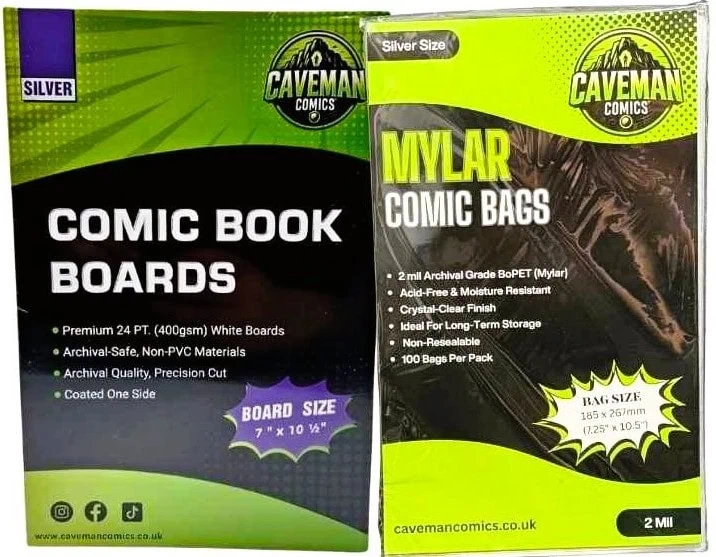
Comic Book Boards
Backing boards support a comic book while it stands inside a box, travels to a show, or is removed from storage for inspection. A properly sized board limits bending without pressing against the spine, stretching the bag, or pushing the cover forward. Collectors should choose boards manufactured for paper storage instead of cutting backing pieces from shipping cartons or household cardboard, since those substitutes were not manufactured for direct contact with collectibles. Library of Congress preservation recommendations discuss suitable acid-free materials for protecting paper collections.
- Boards reduce flex while a comic is handled.
- Proper sizing helps protect exposed edges.
- Shipping cardboard should not replace comic backing boards.
- Stained or distorted boards should be replaced.
- Product specifications can identify board composition.
Acid Free Boards
Acid-free backing boards are manufactured to reduce concerns associated with ordinary paperboard and acidic storage materials. Some products also contain an alkaline buffer intended to counter acids that can develop within paper or migrate from nearby materials. Packaging terminology varies among brands, so collectors should check information about board composition, coating, thickness, and archival claims rather than relying only on the words printed across the front of a package. Yellowing, staining, curling, or changes in the board surface can signal that replacement is appropriate.
- Look for acid-free construction.
- Check whether the board contains an alkaline buffer.
- Review manufacturer specifications before ordering.
- Discard boards showing visible deterioration.
Board Thickness Options
Backing boards come in several thicknesses, and increased rigidity can limit how much a comic book bends while being lifted or transported. Products marketed as Half-Backs or Full-Backs provide greater stiffness than many lightweight boards, though terminology and exact measurements can differ between manufacturers. Heavier boards also occupy more room inside storage boxes, so upgrading hundreds of comics can reduce the number of issues that fit into each container. Reading copies may need only conventional support, while expensive keys, delicate vintage books, and display pieces may justify a thicker option.
- Thicker boards reduce bending.
- Heavy backing uses more storage space.
- Standard boards work for many collections.
- Valuable keys may benefit from stronger support.
- Compare actual thickness specifications before ordering.
Bag And Board Fit
A comic book should slide into its enclosure without resistance while remaining supported enough that it does not shift excessively when the bag is lifted. Corners that repeatedly strike plastic seams can crease, while an oversized backing board may stretch the sleeve until pressure transfers directly to the comic. A bag that is much too large creates a different problem because the issue can move every time the enclosure tilts inside a storage box. A suitable fit leaves limited clearance around the perimeter while keeping the comic resting squarely against its board.
- Never force a comic into a bag.
- Keep corners clear of sleeve seams.
- Match board width to the enclosure.
- Reduce excess movement inside the bag.
Protect Thick Comics
Annuals, giant-size issues, square-bound releases, prestige formats, cardstock variants, and special editions require attention to thickness along with height and width. A bag that works for a standard comic book can pull against the cover of a bulkier publication or compress a square spine without appearing obviously undersized at first glance. Moving to the next enclosure size can provide enough clearance, then a compatible board can keep the larger sleeve from sagging around the comic. Collectors planning to protect an entire set should test the thickest representative issue before purchasing supplies in bulk.
- Measure thick books before ordering supplies.
- Look for cover curvature after insertion.
- Give square spines sufficient room.
- Test an example before buying large quantities.
- Use a backing board suited to the larger enclosure.
Protect Valuable Comics
First appearances, scarce variants, early printings, and other high-value comic book issues may justify upgraded Comic Book Bags and Boards. A polyester sleeve paired with a thicker backing board provides stronger physical support, while a top loader can add another barrier against accidental bending during transportation or display. Storage supplies cannot compensate for damaging moisture, temperature swings, or direct sunlight, so valuable comics still need appropriate environmental conditions. Collectors handling expensive raw books should minimize unnecessary removal from their enclosures because every handling session creates another opportunity for fingerprints, corner damage, or spine stress.
- Consider polyester bags for important keys.
- Use firmer boards for added support.
- Add a top loader when extra rigidity is helpful.
- Keep valuable comic books away from heat and moisture.
- Limit repeated handling whenever practical.
Replace Aging Supplies
Comic Book Bags and Boards should be checked periodically instead of being assumed to remain usable forever. Cloudiness, brittleness, discoloration, warping, tears, failed adhesive, stains, or surface distortion can indicate that an enclosure component is reaching the end of its useful life. Replacing supplies also gives collectors an opportunity to examine staples, page edges, corners, cover surfaces, and spine condition before placing the issue back into storage. Polyester sleeves may remain usable longer than lower-cost plastics under suitable conditions, but every material can still suffer physical damage from handling or poor storage.
- Check bags for haze or cracking.
- Inspect boards for discoloration.
- Replace bent or distorted materials.
- Examine the comic whenever supplies are changed.
Comic Book Bags and Boards Takeaways
Choosing Comic Book Bags and Boards requires matching the enclosure to the dimensions, thickness, age, value, and handling needs of each comic. Current Age, Silver Age, Golden Age, and magazine sizes cover different formats, while polypropylene, polyethylene, and polyester provide different combinations of transparency, flexibility, strength, longevity, and price. Backing-board construction matters just as much because the board supports the comic whenever it stands inside a box or is carried by hand. Collectors can prevent many storage mistakes by measuring unusual issues, reading material specifications, testing the fit before buying supplies in bulk, and rejecting any enclosure that creates pressure along the spine, cover, or corners.
- Match the bag dimensions to the comic book.
- Use a board intended for the same sleeve size.
- Give aging edges enough clearance.
- Select materials according to value and storage needs.
- Replace supplies when deterioration becomes visible.
FAQs
What Size Comic Bag?
The correct size depends on the comic book dimensions, thickness, and publication format. Current Age, Silver Age, Golden Age, and magazine sizes provide useful reference points, but irregular issues should be measured before supplies are purchased.
Are Silver Bags Better?
Silver Age bags are not automatically superior to Current Age sleeves. Their greater width can help with older books, bulky variants, square-bound releases, or comic books that fit too tightly in a narrower enclosure.
Is Mylar Worth It?
Mylar can make sense for valuable comic book issues because polyester film offers strong clarity, rigidity, and a longer expected service life than many inexpensive plastics. Collectors with large collections often reserve it for keys, early issues, and higher-value variants.
Do Comics Need Boards?
Backing boards help support a comic book and limit bending while it is stored, handled, or removed from a box. They become especially useful when comics are kept upright for extended periods.
How Tight Should Bags Be?
A comic should enter its bag without pressure against the spine, corners, or cover. Enough space should remain for controlled insertion and removal while the backing board limits unwanted movement inside the sleeve.