
A comic book grade gives collectors a consistent way to describe condition, ranging from heavily worn copies at 0.5 to exceptional examples at 10.0. The Comic Book Grading Scale considers the cover, spine, corners, staples, interior pages, surface marks, missing material, and structural condition instead of judging a book by appearance alone. Understanding those numbers helps collectors compare copies, evaluate raw books, read certification labels, and recognize why two copies of the same issue can sell for sharply different amounts. Each grade permits a different degree of wear, so learning what separates one level from another can make purchasing, selling, and collecting comic books less confusing.
- The standard grading range runs from 0.5 to 10.0.
- Higher numbers indicate stronger condition.
- Interior defects can influence the final grade.
- Comic book grade and market value measure separate factors.
Comic Book Grading Basics
Collectors can improve grading skills by examining several copies together and checking spine ticks, corners, gloss, creases, staples, page color, and surface wear under clear lighting. A comic book may look impressive inside a sleeve but reveal color-breaking stress lines, small tears, fingerprints, impressions, or back-cover rubbing once removed and viewed from several angles. CGC uses a 10-point grading scale built around established hobby standards and explains that professional grading involves judgment rather than a purely mathematical calculation. Borderline books can receive slightly different opinions because graders must consider the number, size, placement, and severity of defects together.
- Inspect the front and back covers outside the bag.
- Check the entire spine from top to bottom.
- Look at staple and centerfold attachment.
- Examine interior pages for tears, writing, or missing pieces.
- Judge the condition of the complete comic book.
10.0 To 9.8
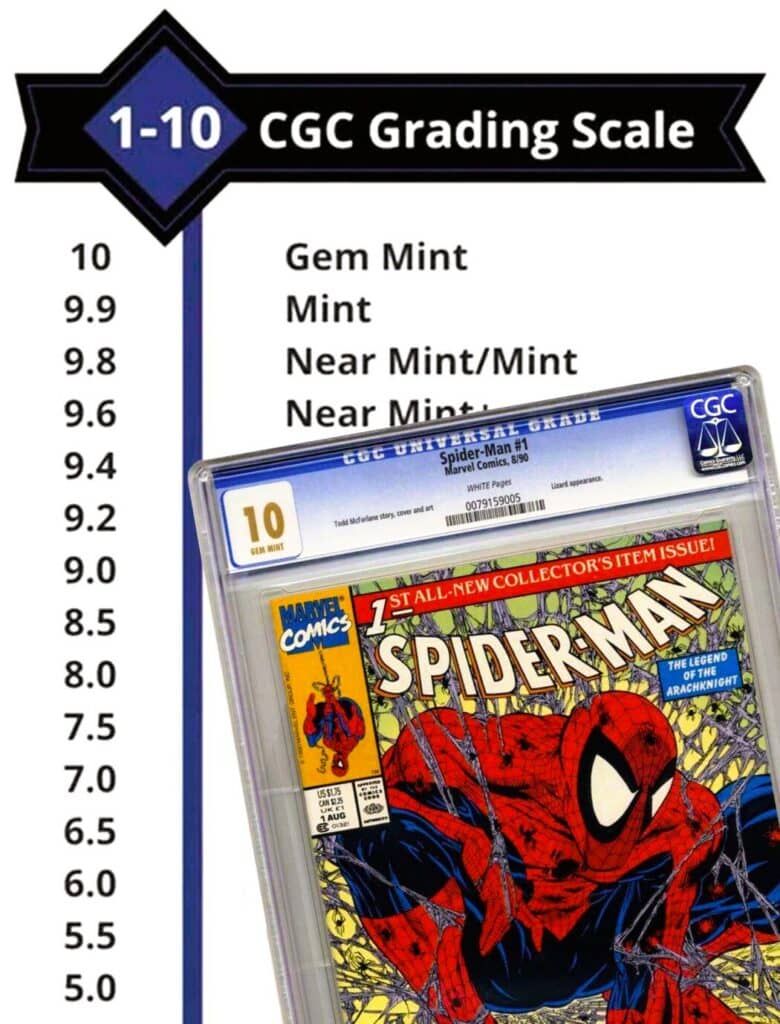
A 10.0 Gem Mint comic book occupies the highest point on the Comic Book Grading Scale and should show no evidence of manufacturing or handling defects. A 9.9 Mint copy may contain a minute production flaw without handling wear, while a 9.8 Near Mint/Mint book can show negligible manufacturing or handling imperfections. New books pulled from shipping cartons do not automatically receive 9.8 or higher because cutting, printing, packing, transportation, shelving, and customer handling can create marks before purchase. One tiny spine break, corner touch, bindery flaw, or surface impression may separate a 9.8 from a 9.9.
- 10.0 represents Gem Mint.
- 9.9 represents Mint.
- 9.8 represents Near Mint/Mint.
- Factory defects can affect upper grades.
9.6 To 9.0
The upper section of the Comic Book Grading Scale includes 9.6 Near Mint+, 9.4 Near Mint, 9.2 Near Mint-, and 9.0 Very Fine/Near Mint. Books in this range can retain striking eye appeal while displaying progressively more evidence of production or handling as the number declines. A 9.4 may show a few short spine stresses, light corner wear, or a faint surface mark, while a 9.0 can tolerate several defects that become obvious during closer examination. Modern keys can show major price differences across these four grades, so buyers should compare the actual defects rather than assuming every high-grade slab presents the same way.
- 9.6 is Near Mint+.
- 9.4 is Near Mint.
- 9.2 is Near Mint-.
- 9.0 is Very Fine/Near Mint.
- Defects become easier to spot as the grade decreases.
8.5 To 7.0
A comic book graded 8.5 Very Fine+ or 8.0 Very Fine can display noticeable wear while retaining attractive color, firm structure, and solid overall presentation. The Comic Book Grading Scale continues through 7.5 Very Fine- and 7.0 Fine/Very Fine, where spine stress, edge wear, rubbing, shallow folds, or corner flaws may become more apparent. Vintage comic books in this range can still look impressive in a display because age-related wear does not automatically make a book unattractive. Collectors pursuing Silver Age or Bronze Age keys may find these grades useful when Near Mint copies carry prices far beyond their budget.
- 8.5 is Very Fine+.
- 8.0 is Very Fine.
- 7.5 is Very Fine-.
- 7.0 is Fine/Very Fine.
6.5 To 5.0
The middle range of the Comic Book Grading Scale includes 6.5 Fine+, 6.0 Fine, 5.5 Fine-, and 5.0 Very Good/Fine. Wear becomes more pronounced here, and a collector may see longer spine stresses, softened corners, cover rubbing, small tears, discoloration, or wider creases. A comic book can remain complete, readable, and visually pleasing even when several flaws are present, particularly if the cover retains strong color and the spine remains attached. Scarce Golden Age and Silver Age issues can attract dedicated buyers at these grades because availability may outweigh cosmetic imperfections.
- 6.5 represents Fine+.
- 6.0 represents Fine.
- 5.5 represents Fine-.
- 5.0 represents Very Good/Fine.
- Visible wear becomes part of the book’s presentation.
4.5 To 3.0
A 4.5 Very Good+ comic book may contain several moderate defects, while a 4.0 Very Good copy can show broader evidence of reading, storage, folding, and handling. The scale continues through 3.5 Very Good- and 3.0 Good/Very Good, where lengthy creases, stains, spine splits, color loss, writing, edge tears, or small missing areas may appear. Structural condition becomes more significant at this point because an attached cover, intact centerfold, and complete story pages can separate one copy from another. Early superhero appearances and scarce debut issues can remain desirable here when stronger examples rarely become available.
- 4.5 is Very Good+.
- 4.0 is Very Good.
- 3.5 is Very Good-.
- 3.0 is Good/Very Good.
- Completeness becomes increasingly influential.
2.5 To 1.5
The lower section of the Comic Book Grading Scale includes 2.5 Good+, 2.0 Good, 1.8 Good-, and 1.5 Fair/Good. The word Good can mislead beginning collectors because a comic book at this level may have substantial creasing, tears, stains, writing, loose staples, cover damage, or missing material. A complete copy of a major first appearance can still attract buyers despite extensive wear because owning the issue may matter more than surface beauty. Collectors examining these books should check for missing pages, coupon cuts, detached centerfolds, loose covers, tape, and interior defects that photographs may not show.
- 2.5 represents Good+.
- 2.0 represents Good.
- 1.8 represents Good-.
- 1.5 represents Fair/Good.
1.0 And 0.5
A 1.0 Fair comic book sits near the bottom of the grading range and can display severe wear accumulated through decades of reading or poor storage. CGC assigns 0.5 Poor to badly damaged collectibles that may have large tears, missing sections, detached covers, staining, brittle areas, or structural failure. Historically significant comic books can still command meaningful prices at these grades when entry-level copies are scarce. An incomplete Golden Age key may remain appealing because a complete example in stronger condition can cost many times more.
- 1.0 represents Fair condition.
- 0.5 represents Poor condition.
- Major structural problems are expected.
- Scarcity can support demand for damaged copies.
Comic Grading Defects
Graders examine more than the total number of flaws on a comic book because size, placement, depth, color break, and structural effect can change how much each defect matters. CGC grader notes can identify fingerprints, water damage, erasure marks, spine stress lines, staple rust, tanning, creases, color touch, tear seals, and other condition problems. A deep color-breaking crease across the front cover can have a greater effect than several tiny marks positioned near an edge, and interior damage can reduce grade even when the exterior presents well. Collectors assessing raw books should inspect the rear cover, inside covers, centerfold, staples, and every story page before assigning a grade.
- Check spine ticks for broken ink.
- Look for water stains and paper rippling.
- Inspect staples for rust or looseness.
- Examine interiors for concealed tears.
- Judge severity rather than counting defects alone.
Page Quality Grades
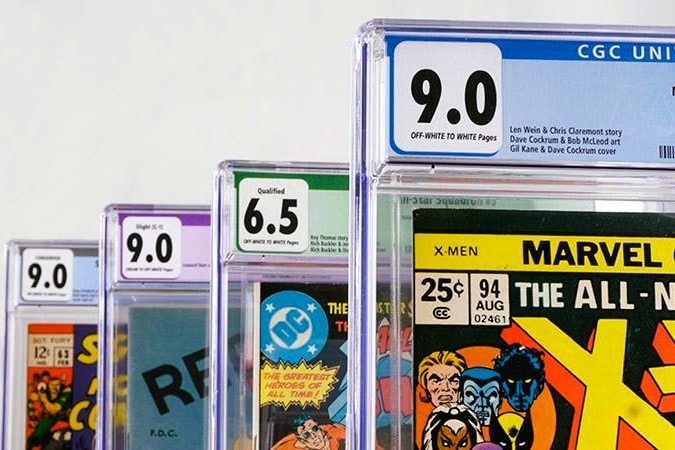
Page quality appears separately from the numerical comic book grade and provides information about the condition of paper inside the issue. CGC classifications include White, Off-White to White, Off-White, Cream to Off-White, and darker page descriptions, along with designations for brittle paper. CGC states that a 10.0 requires White pages and places minimum page-quality requirements on books receiving the highest numerical grades. Two comic books carrying the same numerical grade can therefore attract different interest when one has brighter pages or less evidence of oxidation.
- White represents the highest page designation.
- Off-White indicates some paper aging.
- Cream tones show further discoloration.
- Brittleness can signal weakened paper fibers.
Manufacturing Comic Defects
Some comic book defects begin during printing, trimming, binding, or packaging rather than through reader handling. Miswraps, printing marks, uneven cuts, staple placement, bindery tears, and production creases can appear on copies that have never been read. CGC grading descriptions recognize manufacturing defects within the upper grade ranges, which means a fresh comic can still fall below 9.8 before it reaches a collector. The size, position, and visual effect of the production flaw remain part of the condition assessment.
- Miswraps can occur during printing.
- Staple placement may vary between copies.
- Bindery tears can affect condition.
- Factory origin does not erase grading impact.
Restoration Grade Effects
Numerical condition and restoration status describe separate aspects of a comic book, so collectors should examine both before comparing certified copies. CGC describes restoration as treatment involving non-original material for aesthetic purposes, while conservation focuses on stabilizing a book using archival approaches. Color touch, added pieces, tear seals, and similar work can affect label designation even when the comic presents attractively. CGC does not classify non-additive procedures such as pressing and dry cleaning as restoration, which makes the complete certification label as relevant as the numerical grade.
- Color touch can indicate restoration.
- Added pieces can affect label status.
- Conservation and restoration use different classifications.
- Pressing alone is not considered restoration by CGC.
Raw Versus Graded
A raw comic book has not been encapsulated with a third-party grade, leaving the buyer or seller to estimate condition independently. Professional certification supplies a standardized opinion, but CGC explains that grading is not an exact science and that another company’s assigned grade does not guarantee the same result after resubmission. Online photographs can conceal interior tears, detached centerfolds, staple problems, tanning, impressions, or surface flaws that become visible only when the book is examined in hand. Buyers considering expensive raw comic books should request images of both covers, the spine, staples, centerfold, and representative interior pages before making a condition judgment.
- Raw grades remain estimates.
- Professional opinions can differ.
- Cover photographs may hide serious problems.
- Interior defects can change the assigned grade.
- Detailed images help reduce buying uncertainty.
Comic Book Grade Value
Comic book value does not rise at an equal rate every time a grade increases by half a point. Scarcity, character importance, census population, page quality, restoration status, pedigree, market demand, and recent sales can all influence how collectors price one copy against another. A modern 9.8 may have thousands of certified examples available, while a 4.0 Golden Age comic could represent an uncommon opportunity with few comparable copies entering the market. Collectors researching value should compare completed sales for the same issue, grade, page designation, label type, and restoration status rather than treating an unsold listing as proof of market price.
- Grade is one component of comic book value.
- Scarcity can matter more than appearance.
- Population reports can show graded availability.
- Completed transactions provide stronger price evidence.
- Certification details can influence demand.
Comic Book Grading Scale Takeaways
The Comic Book Grading Scale gives collectors a common language for discussing condition, but the number becomes more useful when the defects behind it are understood. Grades from 10.0 through 9.0 represent exceptionally preserved comic books, middle ranges allow greater evidence of reading and storage, and lower grades accommodate serious damage while still allowing scarce issues to be classified and traded. Page quality, completeness, restoration status, manufacturing characteristics, structural integrity, and visual presentation provide context that one numerical score cannot communicate by itself. Collectors who study certified examples across several grade ranges can develop sharper judgment and make more informed purchasing decisions.
- 10.0 is the highest standard grade.
- 9.8 represents Near Mint/Mint.
- 5.0 represents Very Good/Fine.
- 2.0 represents Good despite substantial wear.
- 0.5 is the lowest numerical grade.
FAQs
What Is 9.8 Grade?
A 9.8 comic book is Near Mint/Mint and may contain negligible manufacturing or handling imperfections. It remains a widely pursued grade for modern key issues.
Is 9.6 Good?
Yes. A 9.6 Near Mint+ comic book remains in excellent condition but can show a few minor defects that prevent a 9.8 designation.
What Is 5.0 Grade?
A 5.0 comic book is Very Good/Fine and can show clear wear while remaining complete and structurally intact. Vintage keys can still have considerable collector appeal at this grade.
Is 2.0 Collectible?
Yes. A 2.0 comic book is classified as Good, and scarce first appearances or key issues can retain collector demand despite extensive defects.
What Is Lowest Grade?
The lowest standard numerical grade is 0.5 Poor. Significant damage or missing material may be present, though rare comic books can still carry collector value at this level.